Author: Dr. Shalom Reich, MD
Emergency Medicine Specialist & Combat Medical Physician with extensive experience in pre-hospital and combat scenarios
Hearing loss and tinnitus (a ringing sound in the ears) are two of the most common health problems faced by military service members and veterans.
These conditions are not just annoying, but can affect daily life, relationships, job performance, and even mental health.
Tinnitus is now the number one disability reported by military veterans in the US and among other military veterans around the world, while hearing loss leads as the most common sensory loss worldwide [4, 6, 9].
Many are unaware of the risks of hearing loss, and the problem has a way of creeping up on those affected, without necessarily having to have been affected by a singular dramatic event.
Oftentimes, even when aware of the risks – soldiers during combat, in life-endangering situations, understandably choose to ignore potential acoustic damage, given other more immediate threats, prioritizing survival over hearing.
Additionally, many service members choose to ignore hearing protection when deployed and in the field – believing that this may limit their awareness of their surroundings and limit team communication.
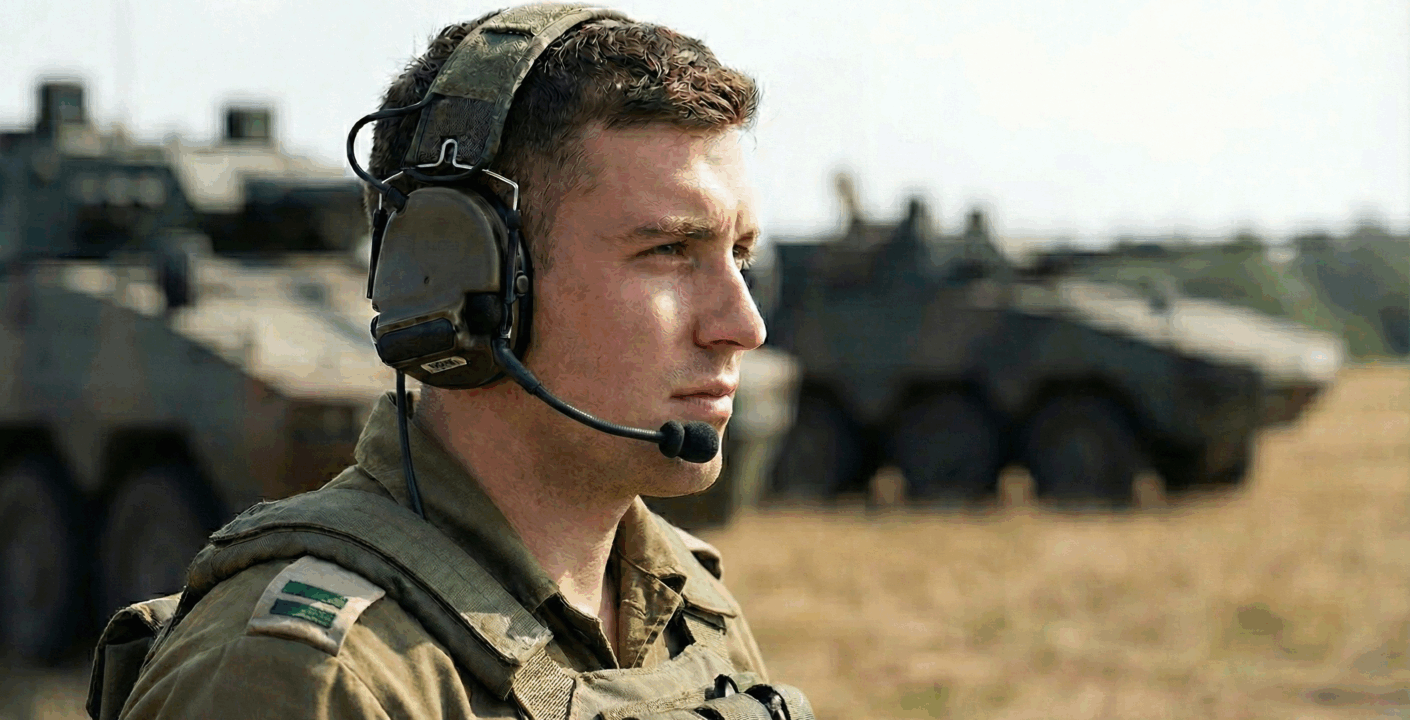
In general, given the nature of prolonged exposure to loud environments such as heavy machinery, loud motors from tanks, APCs, helicopters and aircraft, explosions, and firearm shooting, military personnel face much higher risks than the general public.
Hearing damage can result from prolonged exposure to sounds at or above 85 decibels (dBA), or from a single, short exposure to an intense sound at or above 120 decibels (dB). The risk of hearing loss depends on both the loudness and the duration of exposure.
Decibel Levels and Safe Exposure Times:
Sounds at or below 70 dBA are generally considered safe, even after long exposure. As the decibel level increases, the safe exposure time decreases significantly.
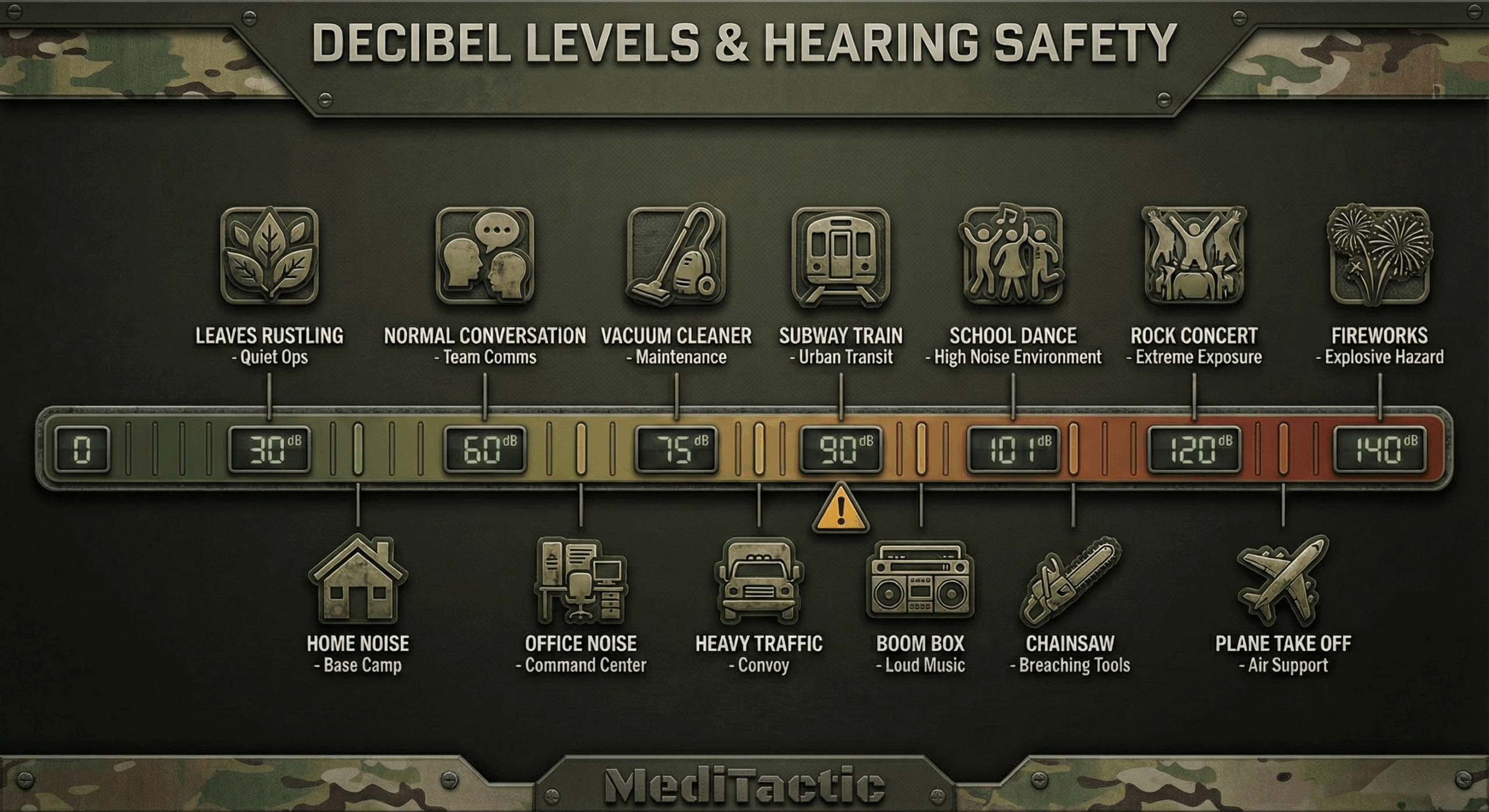
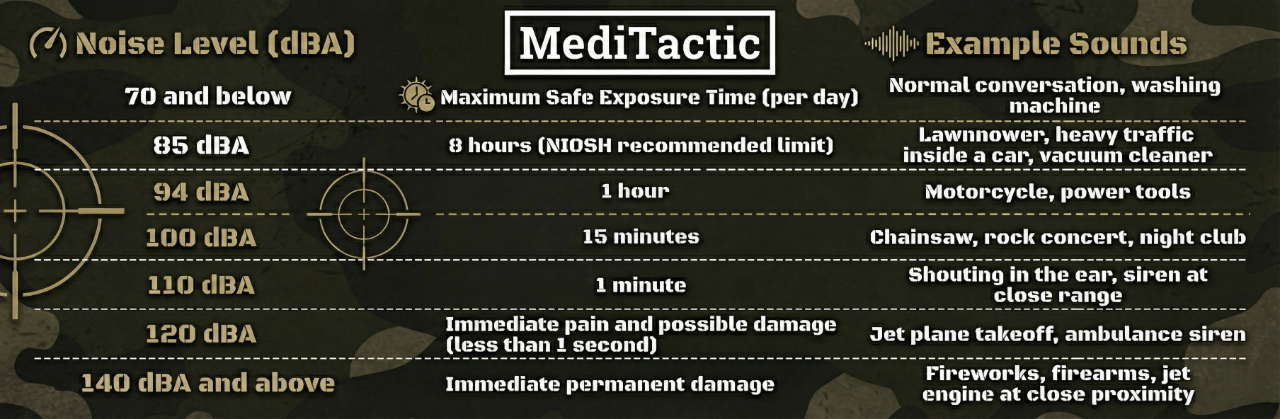
Why Do Service Members Lose Their Hearing?
Research points to several main reasons why hearing problems are so common in the military:
- Blasts and explosions – The shockwaves from explosions can tear the eardrum or damage the inner ear, sometimes along with other serious injuries [1].
- Loud noise exposure – Gunfire, aircraft, and heavy vehicles all produce sound levels far above safe limits. Over time, this damages the tiny cells in the inner ear that allow us to hear, and the damage cannot be reversed [1, 4, 6].
- Head injuries (TBI) – Even a mild concussion can affect the brain’s ability to process sound, doubling the chance of developing hearing problems later in life [9].
- Other health factors – Some medications and conditions like PTSD can make hearing problems worse, creating a cycle where stress, trauma, and hearing loss all feed into one another [1, 3].
How Hearing Problems Affect Daily Life
For service members and veterans, hearing issues go beyond “not hearing well”. A 2023 study found that tinnitus, difficulty hearing low sounds, and feeling like hearing is a problem all lead to reduced ability to function day-to-day [2]. This makes communication harder, reduces awareness in dangerous situations, and lowers overall quality of life.
The mental health impact is especially serious. Many veterans with tinnitus also struggle with PTSD or depression. For unknown reasons, hearing loss and tinnitus seem to have synergistic effects with PTSD [9]. Ringing in the ears can act as a constant reminder of a traumatic event, making PTSD symptoms worse [10]. To make things harder, hearing loss, PTSD, and head injuries often share similar symptoms, which can confuse diagnosis and treatment [1].
What’s Being Done to Protect Hearing
Noise is now recognized as the biggest workplace hazard in the military. The U.S. Department of Defense (DOD) has launched the Hearing Conservation Programs (HCPs) [5] and additional militaries around the world are acting to protect the hearing of their service members.
Programs focus on the following:
- Education and training – Teaching service members about the risks of noise and how to use hearing protection correctly.
- Better hearing protection – Moving beyond simple foam earplugs to advanced devices that both protect ears and allow clear communication. The Personal Interfaced Hearing Protection (PIHP) system is one example, though some soldiers find it uncomfortable or fragile [3].
- Fit testing – Since hearing protection only works if worn correctly, testing is required to ensure each person’s ear protection is giving them the level of protection they need [8].
- New technology – Tools like portable tests (boothless audiometry) and ear health checks (OAE testing) allow doctors to catch problems quickly, sometimes even recently after a loud event exposure [5, 7].
MediTactic’s Role
At MediTactic, we believe hearing protection should never come at the cost of communication or performance. That’s why we focus on offering advanced protective gear and solutions that work in real-world military environments.
Our solutions go beyond basic ear protection by integrating with communication systems and combined with ballistic protection, ensuring soldiers stay both safe and effective in the field.
We aim to provide the most advanced protective technologies available to date and make them accessible to service members. Our goal is simple: to help reduce the risks of hearing loss and tinnitus, while improving overall mission readiness and quality of life for those who serve.
Final Takeaway
Hearing loss and tinnitus are not inevitable parts of military service, or a “price to pay” to maintain situational awareness and communication, as some soldiers believe. These are preventable injuries that require serious attention, with the goal of maximizing long-term effectiveness and promoting health among service members.
With the correct combination of education, awareness, and leading technology – we can protect those who protect us!
References
[1] Auditory and Vestibular Dysfunction Associated with Blast-Related Traumatic Brain Injury. Journal of Rehabilitation Research and Development
By Sandra A. Fausti, Daniel J. Wilmington, Frederick J. Gallun, Patricia V. Helt, and Wendy J. Helt (2009)
[2] The Influence of Tinnitus and Hearing Loss on the Functional Status of Military Service Members and Veterans. International Journal of Audiology
By James A. Henry, Susan E. Griest, Chelsea Blankenship, et al. (2023)
[3] A Survey of User Opinion of Hearing Protection on Military Operations. Journal of the Royal Army Medical Corps. Use of Hearing Protection on Military Operations
By Christopher J. Baker, and Andrew J. Allsopp (2010)
Hearing, Tinnitus, and Ear Disease. Research & Development – US Department of Veterans Affairs
By U.S. Department of Veterans Affairs (no date)
[4] Noise-Induced Hearing Loss and Its Prediction in a Military Setting. Mathews Journal of Emergency Medicine
By Santiago Gonzalez-Gonzalez (2017)
[5] Military Conservation Programs Help in the Fight Against Hearing Loss.
By Department of Defense (no date)
Department of Defense Hearing Conservation and Readiness Program.
By Defense Health Agency
[6] Prevalence of Hearing Loss in the United States by Demographic Characteristics.
By Howard J. Hoffman, Robert A. Dobie, Katalin G. Losonczy, Chrisa L. Themann, and Gregory A . Flamme (no date)
NOISE Study: Noise Outcomes in Service Members Epidemiology. American Academy of Audiology
By Frederick Gallun, et al. (no date)
Hearing Loss in Veterans. Minnesota Department of Veterans Affairs
By Steven Kiemele (no date)
[7] Hearing Protection: A Review of the Current Military-Issued Devices
By Chris James, and Stelios Tzamtzis (no date)
[8] Hearing Protection Fit Testing Now a Requirement for All Noise-Exposed Service Members, Civilians.
By Defense Health Agency (2023)
[9] Association of Tinnitus and Hearing Loss with TBI and PTSD.
By U.S. Department of Veterans Affairs (no date)
Tinnitus and Traumatic Memory. Tinnitus Today
By Marc Fagelson (2016)